
The Sale is Over… Now What?
What’s the first thing that comes to mind when the last buyer is checked out?
Do you panic a little inside when you think about sorting invoices or looking up missing addresses? Do you snap at your spouse or ranch manager or trucking partner when they start shouting questions all at once?
Or maybe you secretly want to join the after party but you know you need to start pulling invoices for the vet to start trich testing bulls?
If you answer “all of the above,” we first want you to know you’re not alone. Hosting a seedstock sale is not for the faint of heart. There are so many moving parts and just when you want to sit back and enjoy the post-sale festivities with your customers, friends and neighbors, your brain shifts into overdrive with all the things that still need to be done.
And the most interesting thing we have observed after clerking hundreds of sales is that everyone on your team wants information immediately but they all want different information and they need it in different formats.
A clerking system can be a life saver on sale day. But when it becomes more than just a clerking system, that’s when the magic starts to happen. What if you can clerk your sale AND turn all that precious data into exactly what you need with the click of a few buttons?
Exactly What You Need, For Exactly Who Needs It
Here’s what most operations don’t think about: different people on your sale team need different information but it’s all coming from the exact same database.
Your ranch manager is thinking: How did those cattle perform? Who was my leading sire group? Did they really pay more for calving ease? What can I learn for next year’s genetics decisions? They want summary data. Performance trends. Buyer feedback.
Your bookkeeper is thinking: Did we reconcile? Who’s on the balance due list? What were my total credits and discounts this year? Did all the credits get used up? They want receivables clarity. A deposit cross check. A clean record of what’s outstanding.
Your delivery coordinator is thinking: Which cattle loaded out on sale day? Which cattle need health certificates? Who’s picking up and who needs delivered? Who made special arrangements? They want lot-to-state mapping. Delivery instructions. Pickup/delivery logistics.
Your vet is thinking: Which lots need trich tests before they leave? Which cattle are out of state and do you have complete physical addresses for all of them? They want delivery timing. Test requirements. EID listings.
Your accountant is thinking: How many cattle sold? What were the total payments, no sales, discounts, credits, and balance due amounts? Did all the numbers tie out at the end of the sale? They want financial details. Totals. Proof of reconciliation.
Everyone is asking the right questions. The problem is that generic software or scattered spreadsheets can’t answer all of them from the same place and certainly not in the right format for them to do their job. So someone ends up having to hunt for information and create spreadsheets by hand, or worse, the information doesn’t get there at all.
What Confidence Can Really Look Like
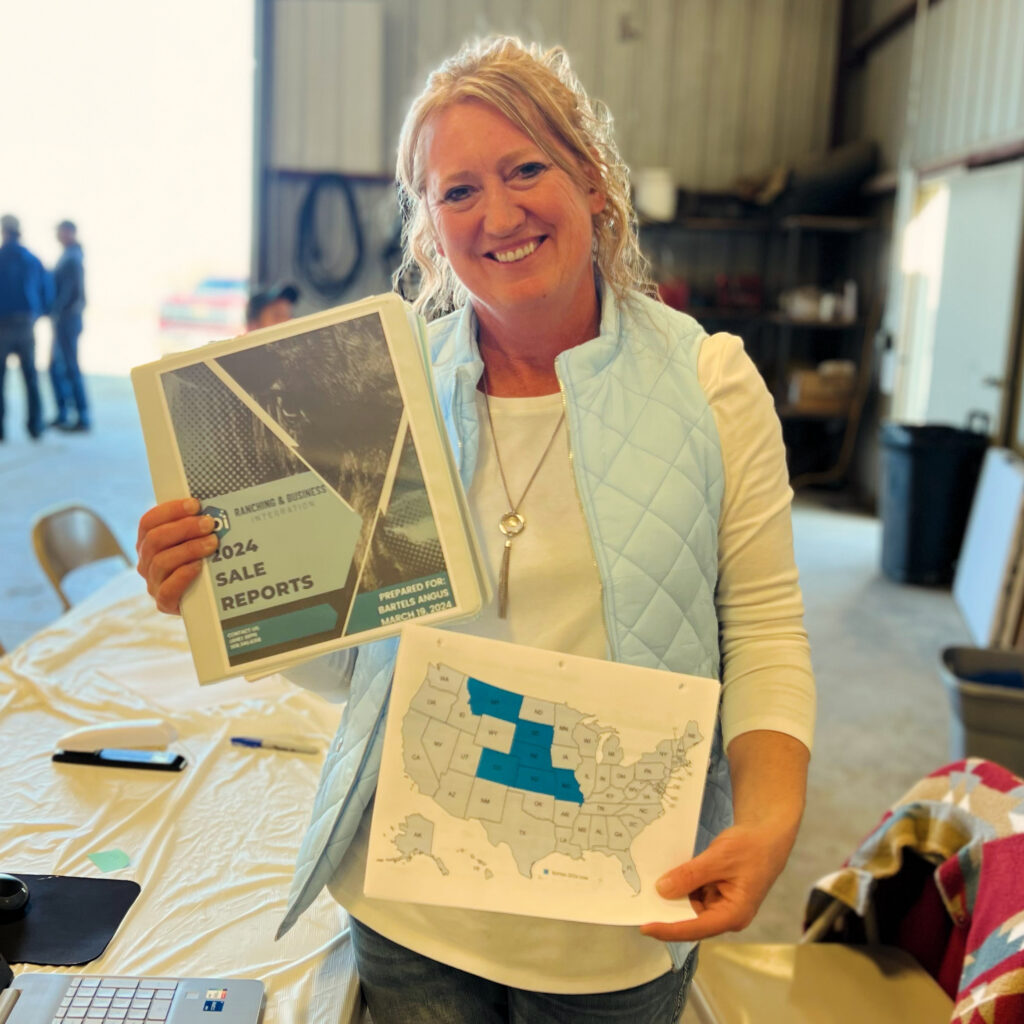
When you have a binder (a real, organized, comprehensive binder) that hits your desk right after the sale, something shifts.
Your wife opens it and sees the buyer summary. Immediately she knows who bought what, what they owe, what needs to be invoiced, what’s paid. She’s not hunting for names or contact information. She’s not calling you asking questions. She has it.
Your husband opens it and looks at the performance summary. He can see what the market wanted. Who lead the sire groups and who the new buyers were at the sale this year. He’s thinking about next year’s breeding season. He can make decisions from actual data instead of just a gut feeling or assumption.
Your bookkeeper sees the reconciliation and a receivables breakdown. She knows exactly what needs follow-up and who’s current. She can post the credits and discounts with confidence instead of hunting through each invoice hoping nothing gets lost.
Your delivery coordinator has the address list, state-by-state lot breakdown, pickup notes, delivery arrangements. He’s not missing a delivery location that he’ll drive right by next week and he doesn’t need four phone calls to figure it out. He has a clear picture.
That’s the power of having the right information in the right format at the right time. Confidence doesn’t come from working harder. It comes from actually having what you need when you need it.
Watch The Conversation Change
Here’s something that doesn’t get talked about much: when you have good information, the way you talk about your sale changes.
Instead of: “I think ________ was my best sire group but I’m not sure because I’ve been too busy to enter the data.”
You can say: “Here’s what sold. Here’s what didn’t. Here’s the trend and my top sire groups. Here’s what I want to do differently next year.”
Instead of: “We need to work on collecting these balance due invoices but I’ll have to sort through them and figure out who still owes us.”
You can say: “Here are the balance due invoices. Here are the mailing labels and pdf copies that go with them. Here’s the contact info and a timeline for follow-up. Here’s what we need to close out this sale.”
Instead of: “I need to sit down with the invoices and a map and start planning deliveries.”
You can say: “Here’s a map with the head count by state, a detailed contact list of buyers by state and the lots they purchased and here is an interactive map showing where every lot is going and what delivery options they chose at checkout.”
That shift from hoping to knowing changes everything. It changes how you plan. How you follow up. How you make decisions. How you talk to each other.
It also changes how you talk to customers. A buyer calls asking about delivery. Instead of hunting for their information, you have it. You can answer immediately. You look professional. That matters to them.
You’re Not Guessing Anymore
The post-sale binder isn’t just paperwork. It’s the tool that turns a busy, hectic sale day into actual, usable information. It’s what lets you step back and see what happened, instead of just surviving the day.
When the information is organized, you can see patterns. You can make better breeding decisions. With certainty, you can identify which customers are reliable repeat buyers, not just guess who you think is on the list. You can make deliveries more efficient and save time, money, fuel and frustration. You can plan better for next year.
And most importantly, you’re not relying on one person’s memory or organization to hold it all together. The system is doing the work. The information is there for everyone who needs it.
That’s when sale day stops being a scramble and starts being a strategic event.
Ready to Have Better Information on Your Side?
Visit rippesolutions.com/rbi to see how the RBI Seedstock Sale Management Software System creates the organized, detailed post-sale reports that let you actually manage your data instead of chasing it. The binder your team produces together becomes the summary you need to make real decisions.