
The Moment Everything Breaks
Your cattle look incredible. You’ve spent months getting them conditioned, photographed, and videoed. You’ve got buyers flying in from three states. The genetics are strong. The marketing has been solid. The sale day energy is exactly what you hoped for.
And then.
A buyer’s invoice goes out wrong. The credit they told you about didn’t get applied, so they just overpaid and now you owe them money back. They are frustrated and you’re left scrambling to issue a refund and reprint invoices.
Or a delivery address got written down wrong. A trucker drives to the wrong location. Cattle meant for Wyoming end up in Nebraska. Now there are phone calls, logistical chaos, an upset customer, and you look unprofessional.
Or the breed association paperwork sat on someone’s desk for two months after the sale and registration transfers are delayed. A customer who was excited about their purchase is waiting, wondering what’s taking so long.
After signing up dozens of new seedstock clients, we’ve heard these stories way too often. And the take away?? It’s rarely about the cattle being wrong. The cattle did their job. The mistakes happen because the paperwork side wasn’t treated like the critical operation it is.
You Can Sell the Cattle, But If the Paperwork Is Chaos, You’ve Sabotaged the Entire Day
We know where the focus goes. It goes to the cattle. Genetics, phenotype, performance data, marketing videos, social media content about the cattle, who the top sire groups are, who the new buyers are. That’s where the energy and the attention lives.
And it should be. The cattle are what you’re selling.
But you know what doesn’t get talked about, and what we see happen ranch after ranch? None of that matters if the paperwork side is an afterthought.
A buyer doesn’t care how perfect your bull is if the experience is bad. A repeat customer won’t come back if they have to chase you down to give you their delivery information for a third time. A registered sale means nothing if the breed association paperwork doesn’t get filed correctly and on time.
The paperwork side isn’t the boring part of the sale. It’s the foundation that determines whether the cattle you bred and marketed actually make it to the buyer correctly, professionally, and profitably.
The Cattle And The Office Are Part Of The Same Team
Here’s what every successful seedstock operation we work with understands: Cattle and paperwork aren’t competitors for attention. They’re partners.
You handle the cattle. Marketing, genetics, talking to buyers about cattle traits and performance. That’s high-value work. It matters.
But it’s not more important than accuracy at checkout. It’s not more important than getting invoices right. It’s not more important than getting delivery coordinated correctly. It’s not more important than getting breed association paperwork filed on time.
Those things are equally important because they’re all part of the same team in your operation.
You can’t make breeding decisions for next year without the post-sale data. Your bookkeeper can’t manage accounts receivable if invoices are wrong. Your customers can’t make their own breeding decisions if cattle aren’t registered correctly and EPDs aren’t updated. Your delivery coordinator can’t do their job if the notes are unclear, inaccurate or missing.
Every person on your team has critical work that needs to be done. The cattle side produces genetics, marketing, and buyer relationships. The paperwork side produces accuracy, timely delivery, compliance, and follow-up. Without both sides working smoothly, the sale is incomplete.
The Pressure Falls On One Person (Usually)
The problem is that most operations treat the paperwork side like it’s easier. Like it requires less skill. Like anyone can do it. The person doing that job is rarely the problem. They’ve simply been asked to manage a complex operation without the tools designed for it.
So it gets handled by one person. Often the same person who’s also thinking about an infinite list of other things. And when something fails, when an invoice is wrong or a delivery location gets missed, people shouldn’t be surprised. Lines of communication fail, details fall through the cracks, and stress wins out at the end of the day.
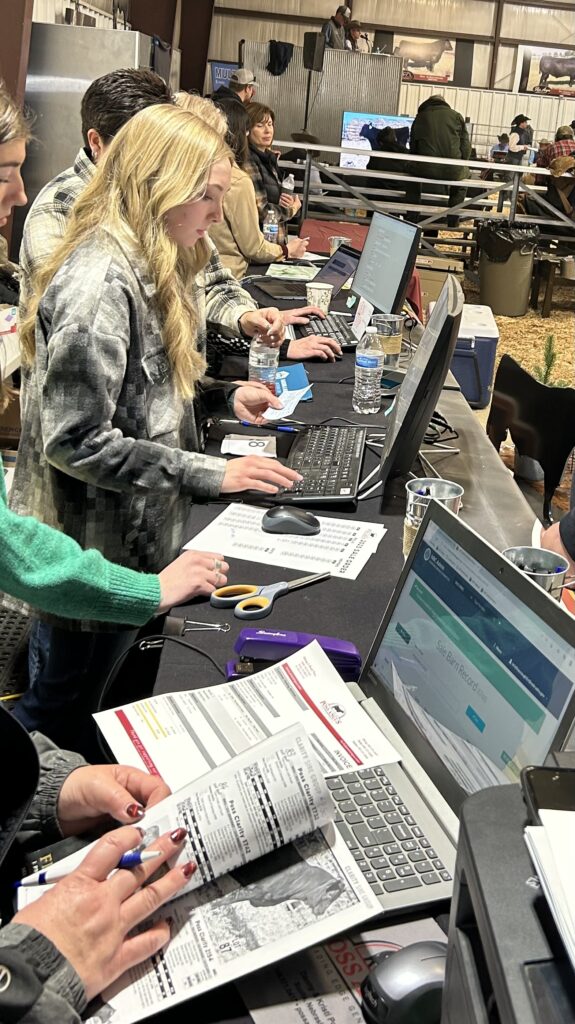
Running a professional sale office during a high-volume event requires real skill. Tracking multiple buyers simultaneously. Verifying credits. Catching errors before invoices print. Managing delivery logistics. Answering dozens of questions and creating the post-sale reports that help people do their job. That’s not easy. It requires focus, but more importantly, it requires a system that’s built to support them.
When the Office Side Is Treated Like a Real Operation
When you have real systems in place and treat the paperwork like the professional operation it is, everything changes.
Invoices are accurate because they’re being created in real-time from organized data, not handwritten and corrected later.
Credits are applied correctly because the system verifies them before invoices print. A buyer doesn’t pay double. You don’t have to issue refunds.
Delivery notes are clear and complete because the information was captured the same way every time, from the same place and it doesn’t live in someone’s head.
Accounts receivable gets managed because you have a clear picture of what’s paid, what’s outstanding, and what needs follow-up. You can make calls with confidence and actual data instead of hunting through invoices.
And the person running the office isn’t carrying all the pressure. The system is supporting the work. It’s organizing the information, catching errors and putting answers at their fingertips.
It’s All Information
Here’s what we’ve learned after hundreds of sales: your seedstock sale is an information event.
Cattle move through. Buyers purchase. Payments happen. Cattle go to new locations. Paperwork follows. Every step creates information that someone needs to capture, organize, communicate, and use.
The cattle side of your sale is built around information: genetics, performance data, pedigrees, EPDs and marketing.
The office side is no different. It’s buyer information, transactions, payments, delivery instructions, registrations and post-sale data.
It’s all information. And the real advantage comes from having that information organized, accurate and available when you need it.
That’s what allows you to answer a buyer’s question without digging through paperwork. It lets you see who still owes money, where cattle need to go, which buyers purchased which lots, and what actually happened across your sale. After the sale, that same data becomes a tool for evaluating buyers, sire groups, geographic reach and trends that can help you make better decisions for the next one.
And you don’t have to hand over control of your sale office to make that happen. You just need the right tools to run it well.
A good system should make your job easier, not take it away from you. It should organize the information, help catch mistakes before they become problems, and put the data you need right at your fingertips.
When you have that, you’re not scrambling for answers or relying on what someone remembers. You have the information. You have the tools. And you’re still in control.
That’s when a seedstock sale stops being a day you survive and starts being the professional operation it should be.
Ready to Stop Treating Your Office Like an Afterthought?
You put too much work into your cattle to let the office side of the sale be an afterthought. Give the people running it the tools, information and support they need to do their job well.
Whether that means equipping your own team with RBI Remote or bringing in our experienced clerking team with RBI Pro, we’ll help you build a more organized, professional sale office while keeping you in control of your operation.
Visit rippesolutions.com to find the right fit for your sale.